
2 min read
Cut Costs, Not Corners with Mari's List
Hey Docs! Podcast Recap – Featuring Mari Sawtelle of Mari’s List Let’s talk gray market, group discounts, and getting the most bang for your ortho...
6 min read
Jill Allen : Thu, Jul 30, 2026 @ 08:00 AM
By Jill Allen | Hey Docs! Podcast with Matt Miller of DentalMonitoring
🎧 Listen to the Full Episode
Spotify | Apple Podcast | YouTube
Technology is changing nearly every part of orthodontic practice management.
From the way practices communicate with patients to the way doctors evaluate treatment progress, new tools are creating opportunities to improve efficiency, strengthen the patient experience, and use clinical time more intentionally.
In this episode of the Hey Docs! Podcast, Jill Allen sits down with Matt Miller of DentalMonitoring to discuss the growing role of artificial intelligence and remote monitoring in orthodontics.
Their conversation explores how these tools can support startups, help established practices improve workflows, and give orthodontic teams greater visibility into patient progress between office visits.
The goal is not to replace the orthodontist or remove the human element from patient care. It is to give practices better information, more consistent systems, and new ways to focus their time where it matters most.
Today’s patients expect convenience.
They are accustomed to managing appointments, communication, payments, and other parts of their lives through digital tools. Orthodontic care is increasingly being evaluated through that same lens.
Remote monitoring allows practices to follow treatment progress between in-person appointments by using patient-submitted scans and AI-supported analysis. This can help the clinical team identify when a patient is progressing as expected, when additional communication may be needed, or when an in-office visit should be scheduled.
For patients, this may mean fewer unnecessary appointments and more convenient communication.
For practices, it can create a more intentional clinical schedule and reduce time spent on visits that do not require the doctor’s direct attention.
JA&A Insight: Technology is most valuable when it improves the patient experience while also making the practice easier to operate.
Startup practices have a unique advantage when introducing new technology.
They are not trying to replace years of established habits, scheduling patterns, or team workflows. They can design their systems around the tools they plan to use from the beginning.
Jill and Matt discuss how remote monitoring can influence decisions about staffing, office size, scheduling, and patient flow.
A startup that builds remote care into its operating model may be able to:
This does not mean every startup should adopt every available technology.
It means owners should consider how technology fits into the long-term practice model before construction, staffing, and scheduling decisions are finalized.
Designing a practice around intentional workflows is often easier than trying to rebuild those workflows later.
Established practices face a different challenge.
They may already have systems that work reasonably well, even if those systems are no longer as efficient as they could be. Introducing new technology can feel disruptive, especially when the team is busy and patient care cannot pause during implementation.
That concern is valid.
Successful technology adoption requires more than purchasing a platform. It requires a clear implementation plan, team training, patient communication, and defined expectations for how the technology will be used.
Practice leaders should consider:
The goal should not be to add another task to an already overloaded team.
The technology should remove friction, reduce unnecessary work, or create better visibility into patient care.
JA&A Insight: New technology should solve a clearly defined operational problem. If the purpose is unclear, adoption will be difficult for both the team and the patient.
Artificial intelligence is often discussed as though it will replace human judgment.
In orthodontics, its more practical role is to support clinical decision-making by helping practices evaluate large amounts of information consistently.
Matt explains that DentalMonitoring uses AI to review patient scans and identify clinical changes or potential treatment concerns. This information can help the orthodontist and clinical team decide whether the patient is progressing appropriately or needs additional attention.
AI may help practices identify:
The orthodontist remains responsible for diagnosis, treatment planning, and clinical decisions.
The technology serves as another source of information that can help the practice respond more proactively.
One of the most significant benefits of remote monitoring is the ability to rethink why patients come into the office.
Traditional scheduling models often rely on routine intervals. Patients are scheduled every few weeks because that has historically been the standard process, even when the visit may not require a meaningful clinical adjustment.
Remote monitoring can provide practices with more information between appointments, allowing visits to be scheduled based on treatment needs rather than habit alone.
This can create more purposeful appointments.
When a patient does come into the office, the team may already have a clearer understanding of what needs to be addressed. The visit can be more focused, and valuable chair time can be reserved for patients who need direct clinical care.
This does not mean eliminating in-person appointments.
It means using them more strategically.
Growth often exposes inefficiencies.
A workflow that feels manageable at a lower patient volume may become difficult to sustain as the practice adds starts, locations, or providers.
Remote monitoring and AI-supported systems may help practices expand capacity without immediately adding the same level of physical space, appointments, or administrative work.
Potential operational benefits may include:
However, technology alone does not create efficiency.
Practices still need clear protocols, defined responsibilities, and consistent accountability. Without those elements, even a strong platform can become another disconnected system.
Efficiency should never come at the cost of relationships.
Patients still want to feel known, supported, and confident in their care. Team members still need to communicate clearly and provide reassurance throughout treatment.
Remote monitoring should strengthen those relationships, not make the experience feel distant or automated.
Practices should be thoughtful about when communication comes from technology and when it should come directly from a team member.
A patient who is progressing as expected may appreciate a quick digital update. A patient who is struggling, confused, or concerned may need a phone call or personal conversation.
The strongest systems help the team identify which type of interaction is needed.
Technology adoption is also a leadership issue.
Even the most effective system can fail if the team does not understand why it is being introduced or how it will make their work better.
Practice leaders should communicate:
Team members are more likely to support a new system when they understand the purpose behind it and have enough time to develop confidence using it.
Training should also continue beyond the launch date.
As the practice gains experience, leaders should review what is working, where patients are getting confused, and whether the technology is delivering the expected operational benefit.
The future of orthodontics will likely involve more digital communication, more remote care, and greater use of artificial intelligence.
Practices that adopt these tools thoughtfully may be able to deliver care with smaller, more specialized teams and more intentional clinical schedules.
The opportunity is not simply to do more.
It is to operate with greater clarity.
Technology can help doctors and teams focus their attention, respond to patient needs earlier, and create systems that support sustainable growth.
The practices that benefit most will be those that connect technology to a clear operational strategy rather than adopting tools simply because they are new.
Remote monitoring allows orthodontic practices to review patient-submitted scans between in-office visits. AI-supported software can help identify treatment progress, potential concerns, and situations that may require follow-up or an office appointment.
Remote monitoring may reduce some routine or unnecessary appointments by helping the practice determine when an in-person visit is clinically needed. Patients will still require office visits for procedures, adjustments, and direct clinical care.
No. AI supports the orthodontist by reviewing information, identifying potential changes, and helping prioritize follow-up. Diagnosis, treatment planning, and clinical decisions remain the responsibility of the orthodontist.
A startup can build remote monitoring into its workflows from the beginning. This may support more efficient scheduling, reduced space requirements, scalable staffing, and consistent patient communication as the practice grows.
An established practice should begin with a clear operational goal, define team responsibilities, provide training, communicate the change to patients, and measure whether the technology is improving efficiency and patient care.
Practices should evaluate the clinical purpose, workflow impact, team responsibilities, patient experience, training requirements, data handling, implementation support, and how the results will be measured.
Remote monitoring and artificial intelligence are not shortcuts for strong practice management.
They are tools that can make strong systems more effective.
When orthodontic practices connect technology to clear workflows, thoughtful leadership, and a patient-centered strategy, they can create more intentional schedules, improve visibility into treatment, and build a more scalable model for growth.
The future of orthodontics will still depend on skilled doctors, capable teams, and trusted patient relationships.
Technology simply gives them new ways to work better.
2 min read
Hey Docs! Podcast Recap – Featuring Mari Sawtelle of Mari’s List Let’s talk gray market, group discounts, and getting the most bang for your ortho...
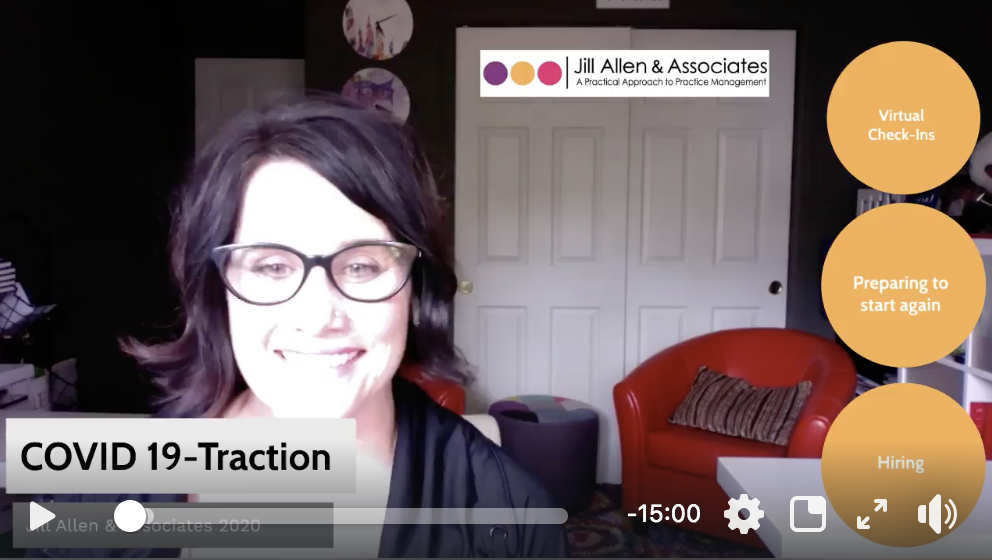
During this third video in my mini-series, I am going to be talking about the hiring process and what may be different for some doctors and office...
3 min read
By Jill Allen | Hey Docs! Podcast with Scott Hansen, LeadSigma 🎧 Listen to the Full EpisodeSpotify | Apple Podcast | YouTube Artificial intelligence...